Reality When a Water Point Breaks in Malawi, and What Happens Next
- Fisherman's Rest Malawi

- 2 days ago
- 4 min read
Collecting water shapes the day in rural Malawi. But what happens when a water point breaks? Mercy is no exception. For the past 22 years Mercy has relied on the village hand pump, located about 400 meters from her home. She is fortunate, but even so, collecting six 20-litre buckets of water daily and shifting them to her house for cooking, washing dishes, bathing… takes time and a lot of strength.

Everything changes when hand pumps break down.
Mercy’s water point was out of service for 15 days. During those two weeks, Mercy and her family were forced to walk approximately three kilometres (imagine around 45 minutes with the heat and a 20 litre bucket on your head) to the next water source equipped with a Malda pump. And to add complication to the situation, the walk crosses a river, without a bridge. This means if it rains, her whole day is turned upside down and Mercy isn’t able to collect water or complete her household chores until the rain stops and the river levels fall.

"The breakdown of the hand pump greatly affected my household," Mercy explained. "During periods of heavy rainfall, the river became flooded, making it impossible to access water."
The long journey coupled with the rains meant she could no longer collect the usual six buckets of water her family depended on each day. Even with her children helping.
"My children were often late for school because of the time spent fetching water," she said.
For families already balancing many daily responsibilities, the loss of a nearby water source quickly became a threat to health, education, and wellbeing.
For families already balancing a fine line between having enough clean water or not, a broken hand pump almost always impacts wider family and village life. Children are late for school, which means sometimes they miss school breakfasts, impacting their ability to concentrate and learn. They are more likely to become unwell, if one child becomes ill, then illness spreads quickly, as even a simple task like hand washing or washing up becomes impossible without water and germs can spread like wildfire.
These are just a few examples why rural African (not just Malawian) communities need more than the installation of a water point.
It’s why our Madzi Alipo programme is a service with a system.
Water point repairs
Community ownership and community funds activated to maintain and repair water pumps
Community training and workshops on maintenance, regular servicing and simple repairs
Education around part quality and long term planning and budgeting
Water quality testing and care of near-by land to keep water sources clean, clear and safe for human consumption
Durable quality parts
A database (MAMS) to record the history of each water point we work with a wealth of water point data open to other service providers and NGOs
Fortunately, Mercy and her family live in the Madzi Alipo catchment area. The Madzi Alipo repair team responded and carried out a full upgrade of the handpump. Worn components were replaced, restoring the water point to full operation. The fault was identified as a cylinder problem and damaged seal, but with a full service and upgraded parts, the water point will work for longer and be more reliable.
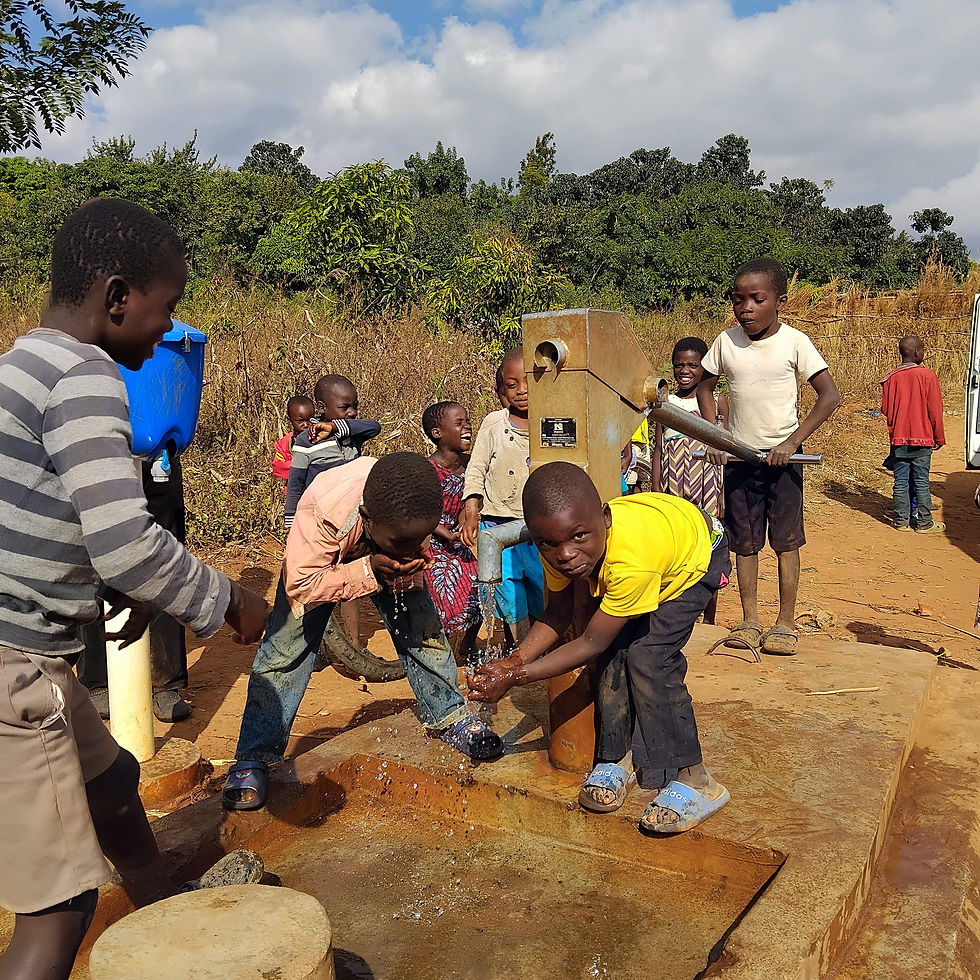
"I was very pleased when the hand pump was repaired and became operational again," Mercy said. "I no longer had to walk long distances or cross the river to collect water. My household activities returned to normal, and my children were able to attend school on time."
Today, the impact of the repair continues to be felt throughout Mercy's household. Easy access to safe water has improved hygiene, reduced the risk of water-related illnesses, and saved valuable time each day. Instead of spending hours travelling to distant water sources, Mercy can focus on caring for her family.
Having a reliable water point transforms simple everyday tasks in daily life.
"We now have easy access to clean water for our daily household needs," Mercy explained. "The time previously spent walking long distances to fetch water is now saved."
Yet Mercy knows that not every family in her village enjoys the same benefit.
As she reflected on what clean water means to her community, she said:
"When we refer to clean water, we mean safe and reliable water obtained from a functional hand pump," she said. "Our village is large, and many households still rely on unsafe water sources because there are not enough hand pumps and rivers are closer."
Mercy hopes that more communities in Kantimbanya Village can receive support for additional hand pumps in the future. Maybe one day Mercy will not just see hand pumps dotted around her village, but tapped and piped water to her house.
We’re a way off that, but it won't stop the dream!
Click below to repair a borehole like Mercy’s for as little as £50 👇


Comments