Why small-scale community tree planting out performs large-scale forests. The complete guide to Malawi's successful reforestation programme.
- Fisherman's Rest Malawi

- Jun 15
- 6 min read
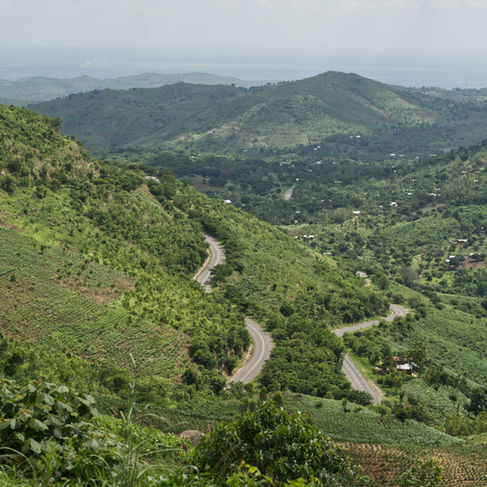
Fisherman's Rest has long been the place where you see the impact of successful tree planting, driving from Blantyre down to the South of the country. You hit the edge of Mirale and start descending into the Shire when you see tree after tree after tree after tree that didn't exist 20 years ago. This change has been brought about by the community reforestation programme and community woodlot protection strategy put in place by Fisherman's Rest Community Projects in partnership with the local forestry department, and it's growing from strength to strength - no pun intended!


The Tree Project, Rooted and Tiyeni: what the names mean
The Tree Project (as a name) is pretty self-explanatory. We plant trees. However, Rooted and Tiyeni are two different parts of this project that have made a huge impact on people and international donors.
Rooted is our online community of monthly donors who have exclusive access to the project. We've never seen anyone do it before, and we've never given this level of accountability and interaction between our project beneficiaries, partners and our donors across the world before.
Once a month, you log on live to the field to find out what the Tree Project is up to, and then there is a detailed monthly update email, that breaks down what's going on in the life of the project. It's incredible. If you want accountability, find out more here.

Tiyeni is our women's tree planting programme, pioneered and funded by a UK trust who wanted to make a difference to the economic livelihoods of women.
This project has gone from strength to strength, with women becoming ambassadors within their communities for better land management, micro fruit businesses and personal growth of members through education, advocacy and community-building. It’s positive groups of women supporting each other in building a stronger future for their children. We're going to tell you more about it below.
The Tree Programme is run by Fisherman's Rest Community Projects (FRCP), a UK-registered charity and Malawian NGO with over 35 years of grassroots work in Blantyre Rural, southern Malawi. It is led by a Malawian team, grounded in community relationships that predate the programme itself, and driven by a single practical ambition: forests that restore the planet, and provide life changing household income for families.
Where it started
The Tree Project began over a decade ago.
We always knew there was a shortage of firewood, we just didn’t know quite how severe it was.
Until we were building schools.
Originally we built blocks using fired bricks made at the building sites, communities were struggling to supply enough firewood to burn the bricks to build the schools.
It became apparent that firewood was scarce; lack of firewood was a massive problem, especially when it came to buildings and development and the demand placed on making bricks at scale for new school blocks.
Communities had barely enough wood to be able to collect bundles for themselves for cooking, let alone the additional quantities needed for bricks.

We pivoted, because burning bricks was not a sustainable strategy. We started manufacturing cement-based bricks, and we also responded to the complete lack of trees and forests around the Nankumba and Madziabango areas, when there is almost nothing, there is a cry for change and we were able to step in.


Communities had no household woodlots. As we researched and spoke with people, many agogo (old and wise) recalled hills of trees, more streams, rich soil and each farmer with their own woodlot.
Because FRCP works in one specific area, we had been working alongside our communities long enough to understand the deeper shape of the problem. The issue was not lack of desire to plant trees, but the knowledge and physical investment needed to bring trees back.
Over the years, that foundation has grown into a comprehensive, multi-layered model that today covers; preserving what’s left of existing community woodlots, planting strategic trees on farmland (for profit as much as the environment) and community planting in what are now protected areas.
2025 Tree Planting at a glance

How the Tree Project model works
The TREE project has four objectives:
It aims to create sustainable natural resources for people. It addresses urgent local needs to access wood for burning, cooking, building, fruit for nutrition, and improved soil fertility for crop growth.
Its second objective is restoring the environment. This addresses the long-term impacts of climate change in deforestation and also conservation education and water catchment management.
Objective number three is to build partnerships and connect funding to source. This is looking at building partnerships with businesses and individuals who want to fund tree planting in a sustainable and human-centred way that allows transparency, accountability, and access to project progress and in-country partners at a level of accountability that no charity that we know of has ever done before.
Fourthly, through income generation. Tree planting traditionally involves vast numbers of trees being planted on bought-up land where very few individuals benefit. What we want to do is run a model where every single household benefits, where businesses are built, where nutrition is improved, where school fees can be afforded, where kids can wear shoes because their families have a sustainable and profitable and rich garden that brings in household income for project-partnered families.
The actual on-the-ground planting of trees is through four strategies:
Planting micro-forests that exist at a household level
Protecting mature forests that exist at community level
Reducing unsustainable firewood consumption through fuel-efficient stoves
Education around sustainable land management, water catchment management, reforestation, and land restoration.

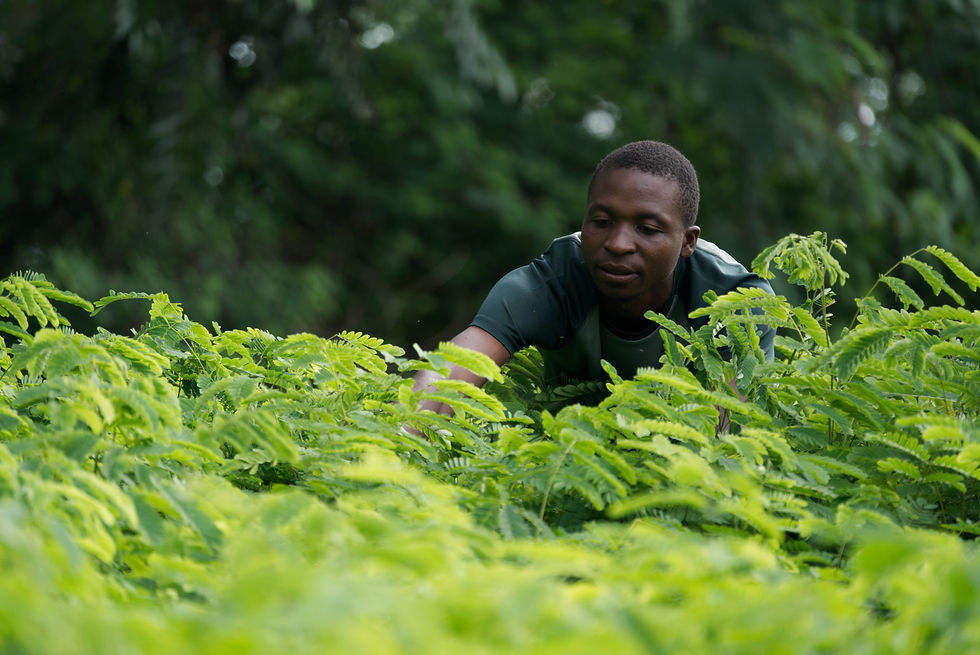
The Tree Project team is hands-on and out in communities every single day, checking on forests, checking on nurseries, checking on seed collection - whatever the stage of the project. Fisherman’s foresters keep up with the farmers who are partnered with us, motivating them, imparting knowledge, running workshops and ultimately encouraging them to keep going.
They naturally collect impact stories about how planting trees is changing lives on a micro level, with fruit sales and small market businesses, as well as on a huge community scale level. We see locusts coming back to forests, streams bursting out of previously dusty, dry hillsides, and communities being incredibly proud of the beautiful and cool micro-environments that they are creating around their villages and homesteads.
What communities say
In Kunselema village, Mrs Kanyoza planted four bamboo suckers in 2021 along the edge of her farm. Only two survived. But those two plants have transformed her land.
Bamboo has become her primary fuel source for the snack-frying business that feeds her family. She now plans to expand her bamboo plot, create a living fence, and sell suckers to her neighbours.
Since planting the bamboos, I have had no erosion. It feels like I built a strong wall
against the water.” - Mrs Kanyoza, Kunselema village

Where Planting Trees is heading
We know that when a tree solves many problems at once, communities protect it.
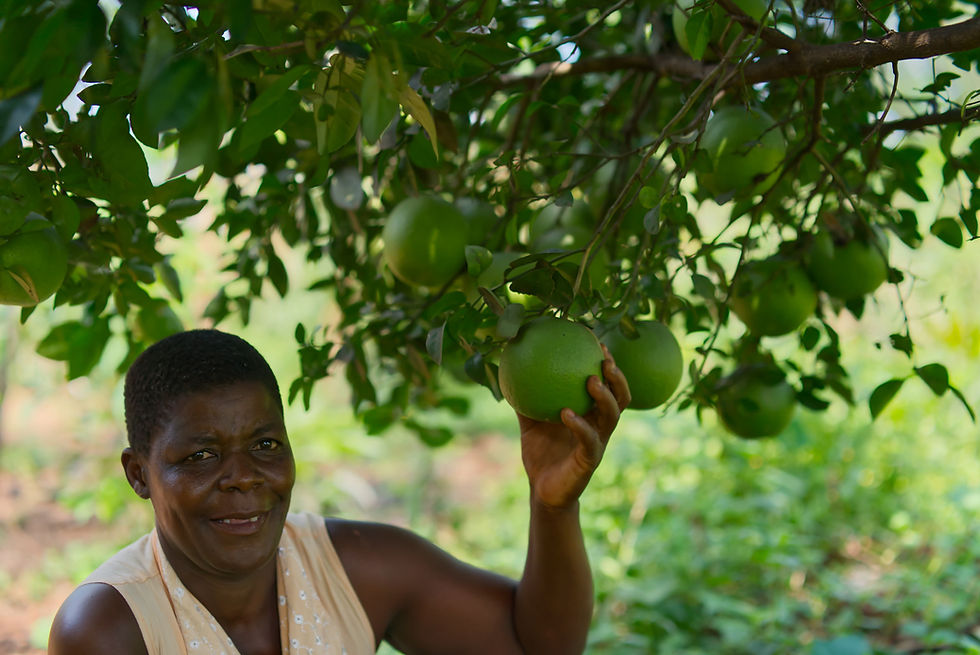
And bamboo is not the only high-value tree, trees that can be coppiced, boundary trees and fruit trees are highly sought after. More fruit trees and bees are part of the future project strategy and aim to bring more economic success and motivation to planting trees.
The land around Fisherman's Rest and in active partnered villages further afield are green almost all year round. It's a visible transformation for everyone driving down the M1 in Malawi.
We hope people start to stop and ask to know more about what's clearly working

Join the work
The Tree Project does a lot with very little.
Whether you are a grant-awarding body, a university or research institution, an NGO working in tree planting, or an individual who wants to follow the programme closely, there are concrete ways to get involved.
Join Rooted for a minimum of £50 a month and get hands on insights and involvement in the project.
Make a one-off donation to the project, a little really goes a long way in Malawi and you're not just planting trees, you are planting trees and even more importantly, providing environmental protection and income for families in Malawi.
Book a collaboration call with Joseph Robinson UK project Coordinator, to discuss large-scale donation and investment opportunities.
The Tree Project is proof that community-led, sustainable tree planting led by communities, where communities benefit, in rural Africa is possible. It is happening right now, in Malawi. The question is can we help others to adapt the model elsewhere and see Malawi turn green.


The Tree Project is a programme of Fisherman's Rest Community Projects, a registered NGO in Malawi and FROM Wales UK charity number 1149385. Learn more at fromwales.org


Comments